A scholar's field guide

UNESCO monuments and the dhamma geography of Sri Lanka, side by side. Thirty-odd sacred and archaeological sites — organised by region, with named kings, dates and architectural detail.

Sacred sites for dhamma practitioners

The working geography of the dhamma.

Heritage sites are also working dhamma sites. These four are the most important if you are coming with practice in mind, not just history. Each is included on one of our journeys.

1st c. BCE Aluvihara — palm-leaf inscription
Aluvihara · Matale

Where the Pali Canon was written

For four centuries after the Buddha's death, the Tipitaka — the entire canonical teaching — was carried by oral recitation alone. In the 1st century BCE, under King Valagamba, the Sangha gathered at Aluvihara and finally committed it to writing on ola palm leaves. Without this act, the earliest verbatim teachings of the Buddha would be lost. Every Theravada lineage in the world descends from this canon. The site is a cluster of rock caves above the road north of Matale; it is small, unassuming, and the most textually important Buddhist site in Sri Lanka.

Visited on: The Dhamma Path (Day 3, on transit Kandy → Anuradhapura). The Pali Canon Trail. Optional reflective stop on the Cultural Triangle.
247 BCE Mihintale — where Buddhism entered Sri Lanka
Mihintale · 12 km east of Anuradhapura

Where Buddhism entered the island

On a Poson full-moon day in 247 BCE, Mahinda Thero — son of Emperor Asoka — intercepted King Devanampiyatissa on the hill at Mihintale and gave him the famous mango-tree logical test. The king's conversion that day initiated the Theravada lineage that has continued, unbroken, for 2,330 years. The 1,840-step climb at sunrise — in our experience, the single most significant historical moment one can stand inside on the island.

Visited on: The Dhamma Path (Day 5, at sunrise). Cultural Triangle. Sacred City of Anuradhapura.
288 BCE Sri Maha Bodhi
Sri Maha Bodhi · Anuradhapura

The oldest documented tree on earth

A sapling of the bodhi tree at Bodh Gaya under which the Buddha attained enlightenment, brought to Anuradhapura by the nun Sanghamitta Theri in 288 BCE. By continuous documented care, the oldest historically recorded tree in the world. We visit before dawn — the only time the tree is properly itself. The 8th-century iron railing added by King Aggabodhi IV is still in place.

Visited on: The Dhamma Path (Day 4, at 05:00). Cultural Triangle. Pali Canon Trail.
Forest tradition Forest monastery — meditation paths under canopy
Working forest monasteries

The Aranya tradition, still alive

The forest-monastery tradition was preserved in Sri Lanka when it died out elsewhere. Today the lineage works in places like Na Uyana Aranya (Pansiyagama; international community of senior bhikkhus); Mitirigala Nissarana Vanaya (a strict Vipassana lineage near Colombo); Polgolla Forest Hermitage (near Kandy); and the lay-teacher centre at Nilambe. Each accepts foreign retreatants for serious stays. Modern Mahasi and Goenka Vipassana trace their lineages, through Burma, back to this Sri Lankan forest source.

Visited on: The Dhamma Path (Days 5 and 7). Forest Monastery Retreat. The Vipassana Journey.

The Cultural Triangle

Four UNESCO sites · two thousand years.

The dry-zone plain bounded by Anuradhapura, Polonnaruwa and Kandy contains the densest concentration of World Heritage in South Asia. This is the cradle of Sinhalese civilisation.

UNESCO 1982 4th c. BCE – 11th c. CE Ruwanwelisaya Stupa, Anuradhapura
Anuradhapura · North Central Province

Anuradhapura · the Sacred City

The first kingdom of Sri Lanka, occupied from the 4th century BCE for some 1,400 years. The Sacred City contains the Sri Maha Bodhi (the oldest documented tree on earth, planted 288 BCE), the great dagobas of Ruwanwelisaya (Dutugemunu, 2nd c. BCE), Jetavanaramaya (Mahasena, 3rd c. CE, once the third-tallest structure on earth) and Thuparamaya (the island's first stupa, 3rd c. BCE), and the rival monastic establishments of the Mahavihara, Abhayagiri and Jetavana.

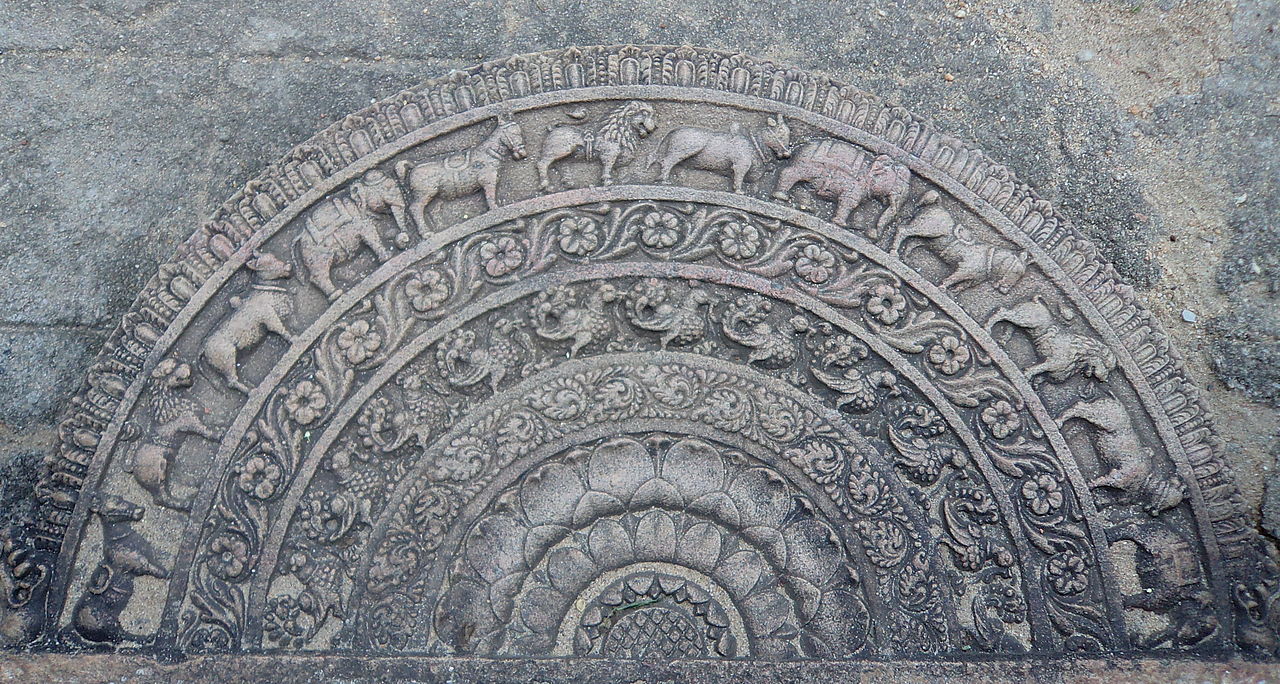
Don't miss: the carved moonstone at Mahasena's palace — the most complete surviving example of the Anuradhapura-period sandakada pahana.
UNESCO 1982 11th – 13th c. CE Polonnaruwa archaeological park
Polonnaruwa · North Central Province

Polonnaruwa · the medieval capital

After the Chola sack of Anuradhapura in 993 CE, the centre of the Sinhalese state moved south-east to Polonnaruwa. Three centuries of compressed glory: the Gal Vihara's four colossal Buddhas (carved from a single granite face under Parakramabahu I, 12th c.), the Vatadage (the most complete surviving circular relic shrine), Lankathilake image house (17 m brick walls still standing), and the Royal Palace of Parakramabahu, originally seven storeys.

Don't miss: the 14-metre reclining Buddha at Gal Vihara — the single greatest piece of sculpture on the island.
UNESCO 1982 5th c. CE Sigiriya rock fortress
Sigiriya · Matale District

Sigiriya · the rock fortress of Kashyapa

A 200-metre granite outcrop crowned with the palace platform of King Kashyapa (477–495 CE), who, having murdered his father Dhatusena, retreated here in expectation of war from his exiled brother Moggallana. The water gardens at the base — symmetrical pools with passive pressure-fed fountains that still operate — are the oldest surviving designed landscape in Asia. Above them, on the rock's western face, twenty-one painted celestial figures survive of an original five hundred.

Don't miss: the Mirror Wall and its 8th–10th c. visitor graffiti — the earliest surviving examples of Sinhala literary language.
UNESCO 1991 1st c. BCE – 18th c. Dambulla Royal Cave Temple
Dambulla · Matale District

Dambulla · the Royal Cave Temple

The largest surviving cave temple complex in South Asia. Five caves, 153 Buddha images, painted ceilings covering roughly 2,100 square metres of continuous mural. The earliest layer dates to the 1st century BCE, when King Valagamba sheltered here during a 14-year South Indian invasion and, on recovering his throne, repaid the monks. The grandest of the murals are 18th-century Kandyan-period repaintings over earlier work.

Don't miss: Cave 2 ("Maharaja Vihara") — the largest of the caves, with a 9-metre painted Maitreya Buddha and 18th-c. ceiling murals in lac red, lampblack and lime.
3rd c. BCE Mihintale
Mihintale · 12 km east of Anuradhapura

Mihintale · where Buddhism arrived

On a Poson full-moon day in 247 BCE, the missionary monk Arahat Mahinda — son of Emperor Asoka of Maurya — intercepted King Devanampiyatissa during a deer hunt on the hill at Mihintale. The king, having passed Mahinda's famous logical test about a mango tree, became Sri Lanka's first Buddhist convert. 1,840 granite steps lead up to the Ambasthala Dagoba where the meeting is said to have taken place. The Kantaka Cetiya's 2nd-c. BCE carved frontispieces (vahalkadas) are the oldest surviving on the island.

Don't miss: the Lion Bath (Sinha Pokuna) and the carved hospital ruins — the earliest surviving institutional hospital in the world.
5th c. CE Avukana Buddha
Avukana · near Kalawewa

Avukana · the rock-cut standing Buddha

A 12-metre standing Buddha image carved from a single granite outcrop in the 5th century CE, almost certainly commissioned by King Dhatusena — the same king who built the great Kalawewa reservoir on whose bund Avukana stands. The figure is in asisa-mudra, the blessing posture, and was never freed from the cliff behind it. The alignment of the statue with the Kalawewa bund and the Yoda Ela canal is part of a deliberate sacred-and-hydraulic landscape.

Don't miss: the sight-line from the Buddha across the Kalawewa to the bund and the start of the Yoda Ela — the visual statement of Dhatusena's reign in three components.

Buddhist Heritage

An unbroken 2,300-year tradition.

From Arahat Mahinda's arrival in 247 BCE to the Temple of the Tooth Relic today: the pilgrimage geography of Theravada Buddhism, intact.

288 BCE Sri Maha Bodhi
Sri Maha Bodhi · Anuradhapura

The oldest documented tree on earth

A sapling of the bodhi tree at Bodh Gaya under which the Buddha attained enlightenment, brought to Anuradhapura by the nun Sanghamitta Theri — daughter of Emperor Asoka — in 288 BCE. It has been continuously tended, recorded and venerated for 2,313 years. The 8th-century iron railing added by King Aggabodhi IV is still in place; the layered platforms are later.

Best time: first light, before the pilgrim crowds; or Poya full-moon evenings for the ritual atmosphere.
3rd c. CE Jetavanaramaya
Jetavanaramaya · Anuradhapura

The largest brick structure of the ancient world

Built by King Mahasena in the late 3rd century CE, Jetavanaramaya rose to 122 m at completion — the third-tallest structure on earth, after the two largest Egyptian pyramids. Around 93 million baked bricks. Weathered now to 71 m, but the scale of the brickwork base and the surviving foundation alignment of the surrounding vatadage still impose. Mahasena's reign is contested in the chronicles: Mahayana sympathies make him a hero to some, an apostate to others.

Don't miss: the partially excavated bodhighara alignment to the south — one of the most complete examples of an Anuradhapura-period sacred bodhi enclosure.
3rd c. BCE Thuparamaya
Thuparamaya · Anuradhapura

The first stupa on the island

Built by King Devanampiyatissa shortly after Mahinda's arrival in 247 BCE, Thuparamaya originally enshrined the right collarbone (akkhaka dhatu) of the Buddha — a relic brought by Mahinda himself. The surrounding granite columns are the remains of a vatadage, a circular roofed shrine added in the late Anuradhapura period to protect the small dagoba.

Architectural note: Thuparamaya is a "paddy-heap" shaped stupa — the earliest of the six canonical dagoba profiles.
1st c. BCE Abhayagiri Stupa
Abhayagiri Vihara · Anuradhapura

The great Mahayana monastery

Founded by King Valagamba in the 1st century BCE on land taken from a Jain monastery, Abhayagiri became the second of the three great monastic establishments of Anuradhapura — and the only one to embrace Mahayana doctrines. The Chinese pilgrim Faxian visited in the 5th century and described 5,000 resident monks, an enormous bronze Buddha, and the four-yearly procession of the Tooth Relic. The dagoba was originally 115 m tall and still stands at over 90.

Don't miss: the Samadhi Buddha, in nearby grounds — possibly the finest seated Buddha image of the 4th c. CE.
UNESCO 1988 1592 onwards Isurumuniya rock temple — placeholder for Kandy Temple of the Tooth
Sri Dalada Maligawa · Kandy

The Temple of the Tooth Relic

The Sacred Tooth Relic — a canine of the Buddha, brought to Sri Lanka from Kalinga in 313 CE — has been the palladium of Sinhalese kingship for seventeen centuries: whoever holds the relic holds the right to rule. It has been kept at Kandy since 1592. The current temple complex sits beside the Kandy Lake, built by the last king of Kandy, Sri Vikrama Rajasinha, in 1807. The annual Esala Perahera procession is among the great religious spectacles of Asia.

Best time: the evening puja begins around 18:30. Drums and pipes; the inner chamber opened. The relic is no longer displayed.
1st c. BCE Sandakada pahana moonstone
Aluvihara · Matale

Aluvihara · where the Tripitaka was written

For the first four centuries of Sri Lankan Buddhism, the Pali canon — the Tripitaka — was preserved orally. In the 1st century BCE, under King Valagamba, the texts were finally committed to writing on ola palm leaves at the rock temple of Aluvihara, north of Matale. This was the world's first written Buddhist scripture and the basis of all subsequent Theravada textual transmission. The original manuscripts were destroyed by a colonial-era fire in 1848; the temple's modern monks continue the copying tradition.

Don't miss: the small monastic museum, where you can watch ola palm-leaf scripture being copied by hand.

Royal Kingdoms

Seven capitals, fifteen centuries.

Between Anuradhapura's founding in the 4th century BCE and Kandy's fall to the British in 1815, Sri Lanka's capital moved seven times. The transitional kingdoms are some of the most rewarding sites on the island.

13th c. Yapahuwa staircase
Yapahuwa · North Western Province

Yapahuwa · brief capital, ornate stair

A 90-metre granite outcrop crowned with a brief medieval capital (1273–1284), briefly the seat of the Tooth Relic under King Bhuvanekabahu I. The ornamental staircase up to the palace is one of the finest pieces of late-Polonnaruwa-style stonework: two roaring lions, dancing figures, and a window screen carved as a delicate stone trellis (now displayed in the Colombo National Museum).

Architectural note: Yapahuwa's lion stair is the model for the lion that appears on the modern Sri Lankan ten-rupee note.
1474 – 1815 Mirisawetiya — placeholder image for Kandy kingdom
Kandy · Central Province

The Kandyan kingdom

The last independent Sinhalese kingdom: from 1474, when the capital first moved to Senkadagala (later Kandy), to 1815, when the last king Sri Vikrama Rajasinha was deposed by the British. The Kandyan kingdom held against the Portuguese, the Dutch and finally the British — the only South Asian polity not to fall to colonial conquest until the 19th century. The lake at the city's centre was built in 1807 by that last king; the island pavilion was a royal bathhouse.

Don't miss: the Royal Audience Hall (Magul Maduwa), where the last king received subjects in the early 19th century.
5th c. CE Royal Water Gardens, Anuradhapura
Sigiriya Royal Gardens

The world's first designed landscape

The water gardens, boulder gardens and terrace gardens at the base of Sigiriya constitute the oldest surviving designed landscape in Asia — planned as a unified urban-aesthetic statement by King Kashyapa in the 5th century CE. The symmetrical pools and the pressure-fed fountains still operate, passively, after seventeen centuries.

Engineering note: the fountains have no pump — pressure is supplied by hydraulic head from underground masonry channels.
12th c. Polonnaruwa Vatadage
Polonnaruwa Vatadage

The most complete circular relic shrine

The vatadage — a circular building enclosing a small dagoba — is a uniquely Sri Lankan architectural type. The Polonnaruwa Vatadage, in the city's central Quadrangle ("Dalada Maluwa"), is the most complete surviving example: a two-tier stone-clad circular platform, four entrance porches each guarded by paired nagaraja figures and a moonstone, and the foundation alignment of the original timber roof. Built either by Nissanka Malla (12th c.) or earlier; the inscription is contested.

Don't miss: the four seated Buddha images facing outward at the cardinal points — the only place on the island where all four are intact in situ.

Coastal Heritage

Maritime forts and colonial layers.

Sri Lanka's coast was successively Portuguese (1505–1658), Dutch (1658–1796) and British (1796–1948). The fortifications, churches and street grids of the maritime cities are a layered colonial archive.

UNESCO 1988 16th – 19th c. Galle area — placeholder
Galle Fort · Southern Province

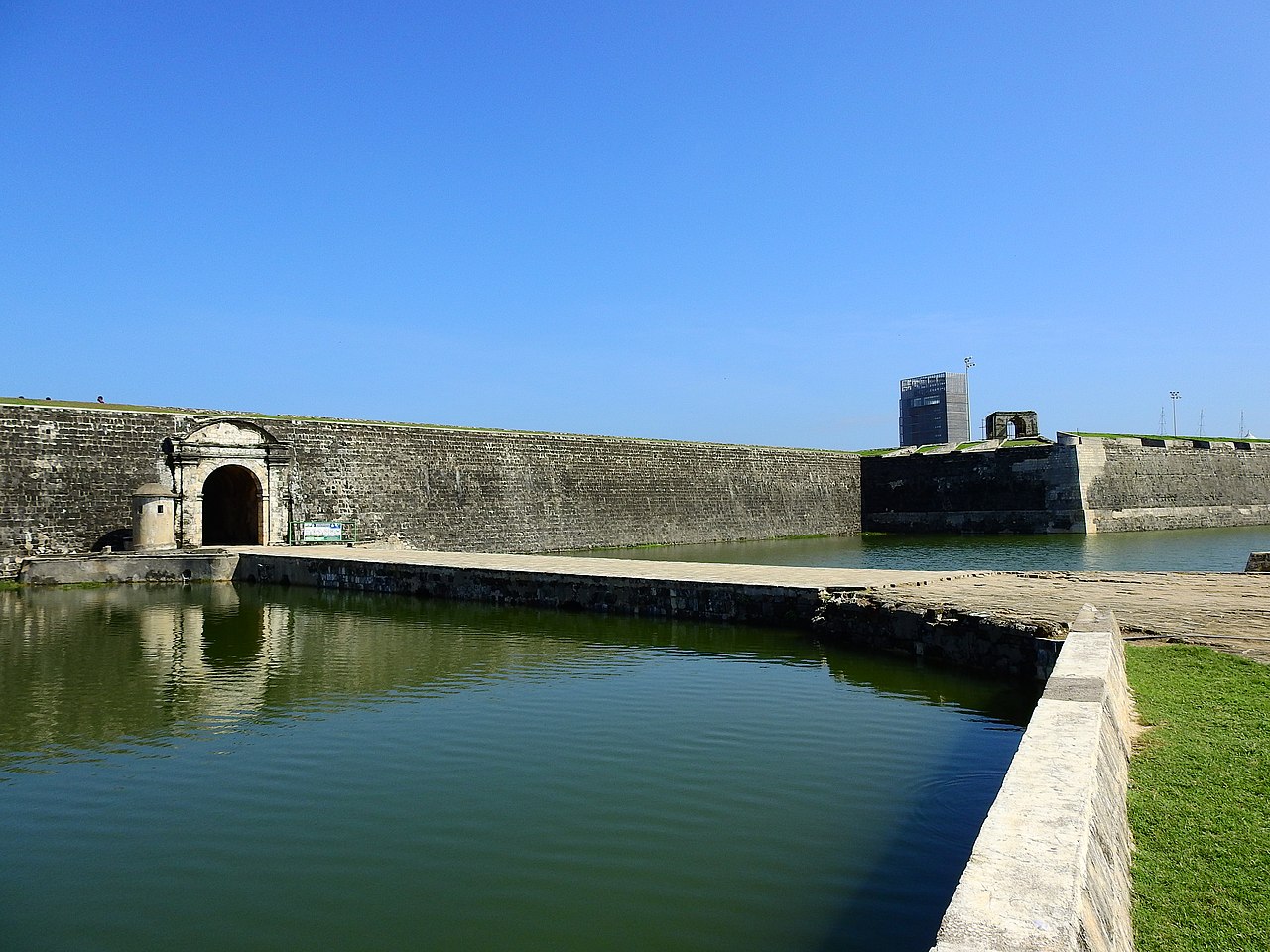
Galle · the Dutch maritime fort

Originally Portuguese (built 1588), then comprehensively rebuilt by the Dutch East India Company between 1663 and 1729, Galle Fort is the largest remaining example of a European-built fortified town in South and Southeast Asia. Inside the 12-metre granite ramparts: a Dutch Reformed Church (1755), the original Dutch Hospital, an 18th-century lighthouse, and a working street grid that has barely changed since the early 18th century. The fort survived the 2004 tsunami with minimal damage — a testament to Dutch engineering.

Don't miss: the Dutch Reformed Church — the floor is paved with re-used 17th- and 18th-century gravestones.
Pre-3rd c. BCE Trincomalee — placeholder
Koneswaram · Trincomalee

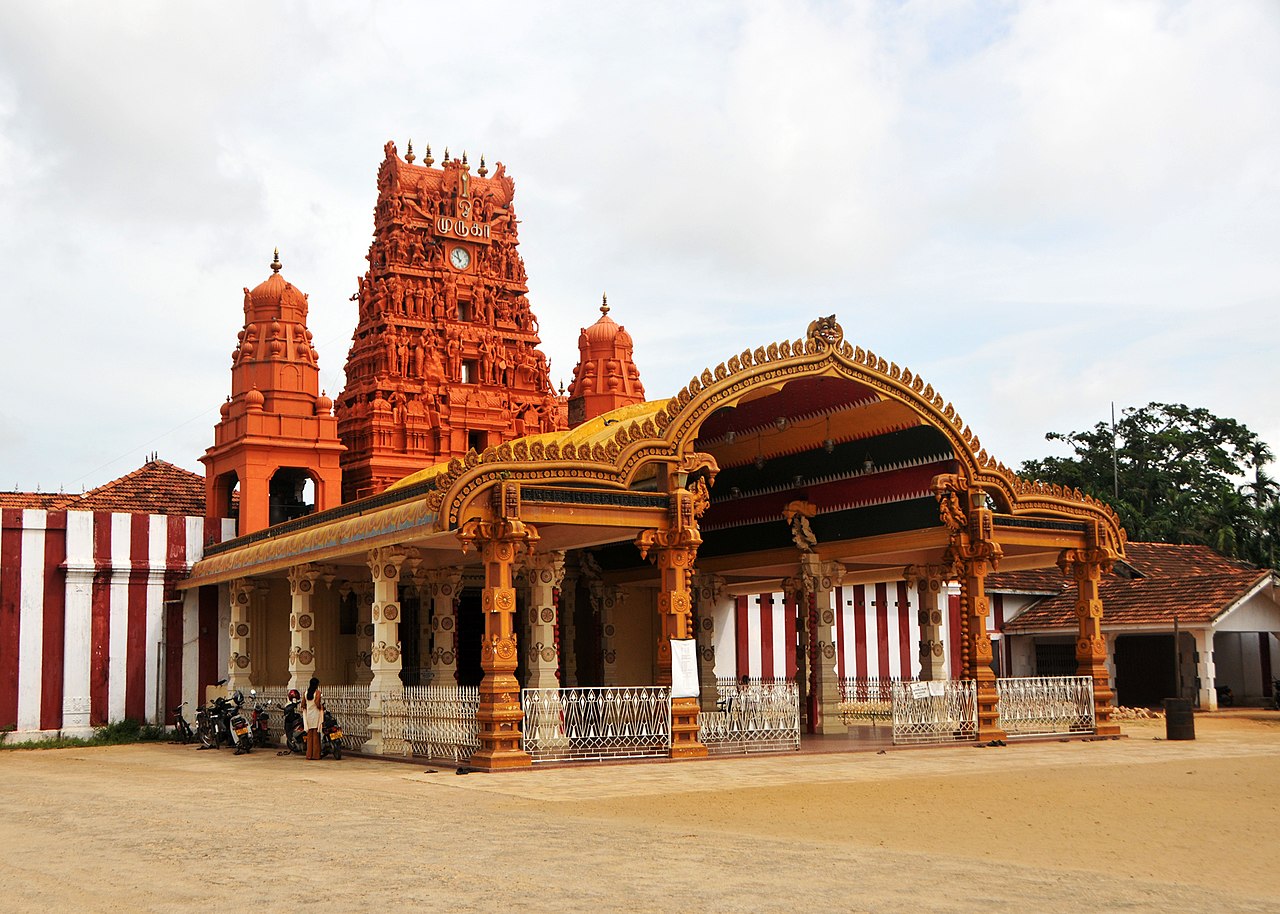
Koneswaram · the temple on the cliff

Sri Lanka's most important Hindu temple, perched on Swami Rock, a 130-metre cliff at the entrance to Trincomalee harbour. The original temple, recorded by Ptolemy in the 2nd century CE and certainly older, was destroyed by Portuguese forces in 1622, the masonry pushed into the sea. Substantial fragments have been recovered by underwater archaeology. The current temple, rebuilt in the 20th century, sits over the original 8th-century-CE foundations.

Don't miss: the views from Swami Rock at sunrise — one of the great panoramas of the Indian Ocean.

Forest Monasteries

The pansukulika tradition.

A parallel Buddhist tradition: forest-dwelling monks living on alms-cloth (pansukula), in austere stone monasteries that prized contemplation over institutional scale.

5th c. BCE onwards Ritigala forest reserve
Ritigala · Strict Nature Reserve

Ritigala · forest monastery in a biosphere

Ritigala is a 766-metre forested ridge rising abruptly out of the dry-zone plain, with a unique microclimate that supports plant species otherwise found only in the wet-zone hills. The forest monastery here dates to the 5th century BCE and was substantially expanded in the 9th century CE under the pansukulika reform. The surviving stone-paved walkways, meditation platforms (padhanaghara) and double-platform retreat enclosures are among the most complete on the island.

Note: permission to enter the Strict Nature Reserve must be arranged in advance via the Department of Wildlife Conservation. We handle this.
6th c. CE Arankale — placeholder
Arankale · near Kurunegala

Arankale · the meditative ruin

A 6th-century-CE forest monastery roughly 24 km north-west of Kurunegala. Less visited than Ritigala but with a comparable architectural vocabulary: long stone-paved processional walkways, austere padhanaghara double-platform meditation enclosures, and a small aramaya bathing tank still fed by a forest spring. The site retains the contemplative atmosphere that the pansukulika reform was meant to recover.

Best time: early morning, when the canopy is alive and the temperature low. Allow two hours minimum.
Plan your journey

A guided visit — heritage or dhamma.

Most of these sites benefit enormously from a specialist guide. Our scholar-led journeys visit the named monuments above with proper context — archaeology and dhamma threads woven together as the site demands. Not a brochure tour.